REACH is a European Union regulation (1907/2006/EC) restricting the levels of specific chemical substances in all imported goods. Read more to learn how to comply with REACH and how to schedule testing on our online platform.
EU REACH Compliance and Testing
Registration, Evaluation, Authorization and Restriction of Chemicals (REACH) is one of the most comprehensive pieces of environmental legislation to come out of the European Union. It pertains to EU-based manufacturers and importers, requiring them to register chemicals that are manufactured or found existing in their products with the European Chemicals Agency (ECHA). This applies to all chemical substances that exceed one metric ton/year on a per substance per manufacturer basis. Failure to comply could result in product bans from sale in the EU market.
REACH testing is one of the methods used to determine whether or not products contain restricted chemicals, or substances of very high concern (SVHCs). Third-party laboratory testing allows you to verify compliance by testing for restricted or threshold-limited substances.
Restricted and Limited Substances
REACH compliance testing tests products for the presence of substances found on Annex XVII and Candidate List of SVHCs. If a chemical is present in any concentration and is listed on Annex XVII, it will fail testing and would be banned from the EU market. SVHCs require authorization to be used in any product and are generally allowed if the concentration is less than 0.1% of the total product weight. If the concentration is higher, the importer or manufacturer must disclose this to customers with correct labeling and to ECHA, and may be subject to restrictions.
Below are some of the chemicals REACH regulates:
Annex XVII Restricted Substances
Phthalates
AZO colorants in textiles
Nickel release from metal products in direct contact with skin
Candidate list of SVHCs (Substances of Very High Concern)
Carcinogenic, Mutagenic or toxic to Reproduction (CMR)
Persistent, Bioaccumulative and Toxic (PBT) or very Persistent and very Bioaccumulative (vPvB)
Identified, on a case-by-case basis, from scientific evidence as causing probable serious effects to human health or the environment of an equivalent level of concern as those above (e.g. endocrine disruptors).
What to Expect from REACH Testing
In your REACH compliance tests, we can test for all 235 SVHCs and deliver you a detailed report that includes the REACH-compliant testing methodology used, test results, and pictures of the specimens you provided. The report will deliver a PASS/FAIL determination and concentration levels for SVHC tests. We also offer screening for selected SVHCs based on client request.
You can also leverage QIMA’s quality control expertise by integrating REACH testing with your product inspections. This option allows you to maintain product quality and ensure REACH compliance at the same time.
Recent REACH Updates
Candidate List Extension
On June 14, 2023, 2 new SVHCs were added to the Candidate List (Diphenyl(2,4,6- trimethylbenzoyl)phosphine oxide & Bis(4-chlorophenyl) sulphone), which now contains 235 substances.
Why Partner with QIMA for Your REACH Testing?
QIMA REACH testing can help you prepare your registration of chemical substances with ECHA and ensure compliance with REACH requirements.
Our regulatory expertise in the EU is supported by:
A network of global labs providing one-stop service to you and your suppliers
Industry leading turnaround time for testing
Testing capabilities covering a wide range of consumer products including electrical & electronics, hardlines, softlines, toys and juvenile products
Lab experts trained and certified in regulatory standards and the newest testing methods
Global technical support team with rich experience to help you build tailor-made testing programs
Easy online and mobile booking and dashboard for managing orders and accessing data anywhere, any time
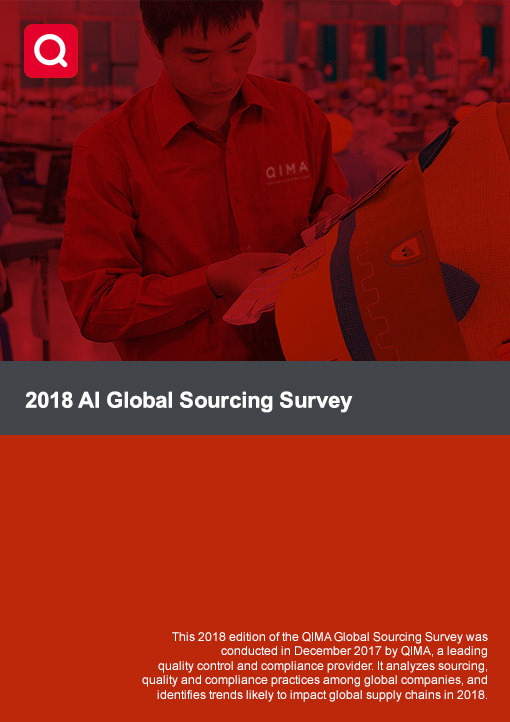
This survey report analyzes the latest developments in global procurement patterns, including a general outlook for 2024 and key trends such as the growing importance of ESG, the relationship between supply chain digitization and multiple facets of compliance, and the evolution of key sourcing geographies, with a special focus on China and nearshoring regions.
Navigating the Complexities of Supply Chains: Your Step-by-Step Guide to Mapping Your Supply Chain
In this quick guide, we will explore the intricacies of supply chain mapping, its benefits, and challenges. You will also understand how technology can play an important role in helping companies stay transparent and accountable.
Understanding The EU Green Deal: A Comprehensive Guide for Businesses
The European Green Deal is a transformative policy framework introduced by the European Commission to steer the EU towards a sustainable, climate-neutral, and environmentally friendly economy by 2050. This comprehensive guide for businesses offers an in-depth exploration of the EU Green Deal.
Environmental Labeling Obligations for Packaging: EU and UK Rules
Packaging is an essential component of the product life cycle, but it is also becoming a significant environmental concern. As the awareness of the environmental impact of packaging waste grows, several environmental labels have been introduced to assist consumers in correctly disposing of product packaging. For brands and suppliers operating in the EU and UK markets, it is crucial to understand which labels should be included on product packaging.
Recycled Polyester (rPET) in Your Supply Chain: What You Need to Know
Polyester has been a staple in the textile industry since the 1970s. However, the negative environmental impact of polyester fabric has raised concerns among consumers. As a result, recycled polyester fabrics are gaining popularity as a more sustainable alternative.
While many brands and suppliers are making efforts to incorporate recycled polyester fabrics into their products, it remains challenging to verify the authenticity and quantity of recycled polyester in these items. This presents a dilemma for consumers who want to make informed choices.
Mexico Nearshoring for U.S. Brands: Advantages and Challenges
Always an important trade partner of the United States, Mexico has seen increased interest as a nearshoring destination for American brands and retailers over the past few years. While sourcing from Mexico offers U.S. buyers a number of advantages, such as geographic proximity and preferential trade terms, businesses doing business with Mexican suppliers must also be aware of the challenges specific to this market.
Triman and Info-Tri: Product and Packaging Labeling Requirements for the French Market
The Triman logo is a mandatory, unified signage for end-of-life products created from the French Decree in order to harmonize the separate collection systems within France. On January 1, 2022, new modifications were made and the Triman logo must be accompanied by further sorting instructions (Info-Tri). Since Info-Tri varies for different product groups, what label and Info-Tri should you include on your products? What if the size of the label doesn’t fit on the product? And where can you find the most updated artwork and information?
This report analyzes the latest developments in global procurement patterns, as well as long-term trends and patterns of the past five years, with a focus on evolving supply chain challenges, digital transformation and shifting attitudes to ESG.
Cybersecurity for IoT and Beyond: Complying with EU Regulations
As electronic devices like phones, smart home appliances, and toys become increasingly interconnected, the importance of cybersecurity has grown tremendously. In response, governments and regulators have introduced standards to ensure cyber safety for such devices. With mandatory cybersecurity regulations set to take effect in EU countries in August 2024, businesses need to prepare their products to comply with these regulations. Ensuring customers feel secure while using your products is essential to building trust in your brand. How can you help your clients have peace of mind? We can guide you through the steps to prepare for and comply with these regulations.
EU directives for E&E products: What you need to know to ensure product compliance?
Operating electrical and electronic (E&E) products could pose potential risks to users. To ensure consumer safety and keep up with technological development, governments worldwide are continuously revising and tightening safety regulations of E&E equipment. In the European Union (EU), various directives and regulations have been established for E&E products. Under the E&E related regulations, what requirements do you need to be aware of to ensure that your products are compliant? What upcoming regulatory updates do you need to prepare for and why is electrical safety test necessary for the EU market?
A Step-By-Step Guide on Implementing Your ESG Risk Strategy
Today’s volatile environment requires companies to rethink and reshape their traditional risk assessment approaches, including ESG risks. This quick guide will help organizations navigate supply chain disruptions, increasing regulatory pressures, the consolidation of a multitude of ESG frameworks and the increasing types and frequency of risks when implementing your ESG risk strategy.
PFAS, or per- and polyfluoroalkyl compound substances (PFAS) have been widely used in consumer products because of their properties, which include water and oil resistance, stability under extreme temperatures and chemical inertness. However, due to the dangers that PFAS pose to human health and the environment, the governments and consumer protection agencies of many countries have been taking steps towards stricter regulation and subsequent elimination of PFAS.
Taking Action: How to Rid the Textile Industry of APEOs
The European Chemicals Agency (ECHA) has enacted a new requirement on textile article, Annex XVII to REACH, which came into effect on 3 February 2021. As many suppliers and their manufacturers found themselves failing the requirement, brands are having their own APEO requirements to ensure their textiles products achieve product compliance in the EU.
Gulf Conformity Mark (G-Mark) for Low Voltage Electrical Equipment (LVE)
This handbook provides an introduction to the G-Mark certification process, specific requirements for LVE products, and guidelines for displaying the G-Mark on your products.
This handbook provides an introduction to the G-Mark certification process, specific requirements for toys, and guidelines for displaying the G-Mark on your products.
In September 2020, EU 2020/1245 was enacted by the EU to limit the ingestion of harmful substances from Food Contact Materials (FCM). This new regulation directly impacts the FCM industry, which is one of the most highly regulated industries in the world. FCM brands need to adapt to the changes to stay compliant and continue to deliver safe products to consumers.
Proving E-Bike Quality and Safety for Recognition in the Growing EPAC Market
As people increasingly turn to e-bikes around the world for exercise and leisure or as a more environmentally-friendly option for commuting, regulations for quality and safety are quickly being put into place.
This report analyzes the latest developments in global trade in 2022, as well as the long-term trends and patterns of the past three years, with a focus on shifting sourcing geographies and supply chain disruption.
Mandatory Human Rights & Environmental Due Diligence: How to Get Prepared
With responsible business conducts becoming more stringent than ever, companies are required to follow an increasing number of mandatory due diligence legislations. This quick guide provides insights and guidelines on the current regulatory landscape to help you effectively implement your due diligence system.
Will Collaborative Intervention Finally End Modern Slavery?
With an estimated 40 million people enslaved worldwide, can collaborative efforts between consumers, governments, brands and NGOs eliminate modern slavery for good?
The CE mark is required for many products to be sold in the EU, however, manufacturers are solely responsible for understanding the requirements for their products and ensuring compliance.
Proving E-Bike Quality and Safety for Recognition in the Growing EPAC Market
As people increasingly turn to e-bikes around the world for exercise and leisure or as a more environmentally-friendly option for commuting, regulations for quality and safety are quickly being put into place.
Quick Guide: Quality and Compliance for Amazon Sellers
Amazon sellers have a responsibility to ensure that their products are high quality, safe to use, and meet all regulatory standards of their target market.
Germany's New Supply Chain Law: What You Need to Know
Germany’s Supply Chain Due Diligence Act was adopted in June 2021. This Quick Guide provides an overview of the legislation (as of July 2021) and practical suggestions on preparing your supply chain for the upcoming changes.
Quick Guide: Safely Restarting Your Retail Business Amidst the COVID-19 Pandemic
An overview of best practice prevention measures and guidance to support retail stores to safely resume and continue their operations during the COVID-19 pandemic.
Quick Guide: Safely Restarting Your Restaurant Business Amidst the COVID-19 Pandemic
An overview of best practice prevention measures and guidance to support restaurants to safely resume and continue their operations during the COVID-19 pandemic.
Quick Guide: Safely Restarting Your Fitness Center Business Amidst the COVID-19 Pandemic
An overview of best practice prevention measures and guidance to support fitness centers to safely resume and continue their operations during the COVID-19 pandemic.
Quick Guide: Safely Restarting Your Hotel Business Amidst the COVID-19 Pandemic
An overview of best practice prevention measures and guidance to support hotels to safely resume and continue their operations during the COVID-19 pandemic.
Verifying Hygiene Practices at Your Factories Amidst the COVID-19 Pandemic
An overview of best practice health and safety measures that should be in place at your factories to ensure safe operations during the COVID-19 pandemic.
This report analyzes the evolution of global sourcing in response to the ongoing COVID-19 pandemic, US-China trade tensions and other disruptions to global supply chains.
2019 QIMA Supply Chain Conference - the Full Report
QIMA gathered more than 300 supply chain professionals in Hong Kong for our 3rd annual conference on the driving forces affecting global supply chains.
The Customs-Trade Partnership Against Terrorism (C-TPAT) is a supply chain security program led by U.S. Customs and Border Protection focused on improving the security of private companies' supply chains with respect to terrorism.
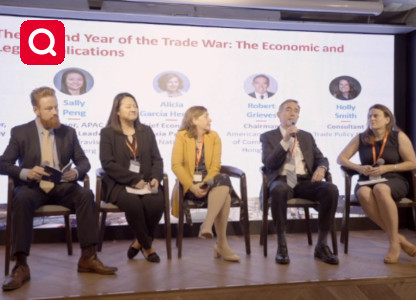
Explore the findings of QIMA’s 2019 survey of 150+ businesses worldwide to find out how global supply chains and sourcing strategies are evolving in the second year of the US-China trade war.
Trade Wars, Brexit, and Global Supply Chains in 2018
Get an exclusive look behind the scenes following a survey to QIMA's database to undercover how the escalating US-China trade stand-off is affecting global supply chains and sourcing strategies halfway into 2018.
2018 QIMA Sustainability Conference - the Full Report
Annual conference bringing together hundreds of supply chain and CSR professionals to discuss the latest challenges and opportunities in sustainable sourcing and supply chain ethics.
Sustainability and Ethics in Supply Chains: Current State and Progress
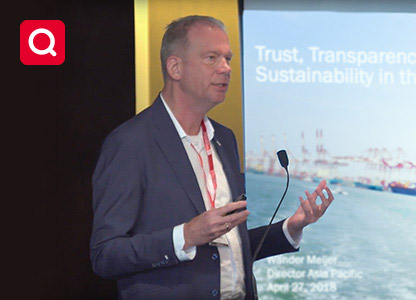
Sustainability Conference - Michael Bland presented an overview of the current state of sustainability and ethics in global supply chains, highlighting issues specific to individual countries and industries.
Lessons for Brands Looking to Eliminate Forced Labor from Their Supply Chains
Sustainability Conference - As the leader of the Modern Slavery Outreach Program implemented by the major sporting brand Adidas, Aditi Wanchoo shared the brand’s experience mitigating modern slavery risks at multiple tiers of a supply chain.
The Importance of Worker Voice in Managing Migrant Labor Modern Slavery Risks
Sustainability Conference - Pentland Brands, together with the NGO Issara Institute, emphasize the importance of making worker voice heard cross complex supply chains and shared practical examples of fostering worker empowerment and ethical recruitment practices.
Leveraging Technology to Fight Modern Slavery in Supply Chains
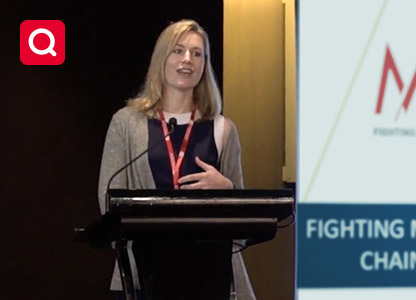
Sustainability Conference - The Mekong Club aims to harness the skills of the private sector to combat human trafficking. Dr. Zoe Fortune outlines the main advantages and opportunities offered by modern digital technologies in the ongoing fight against modern slavery.
Working Towards Gender Equality in Global Supply Chains
Sustainability Conference - Marat Yu shares key insights on gender equality and women’s rights from his work with HERProject, a collaborative initiative that strives to empower low-income women working in global supply chains.
Best Practices for Establishing Your Brand as a Recognized Sustainability Leader
Sustainability Conference - Building on 20+ years of data collected by the strategy and insights consultancy Globescan shares practical insights to help brands better communicate their sustainability efforts to the consumer and become recognized sustainability leaders.
How Will China’s New Environmental Protection Tax Affect Your Sourcing?
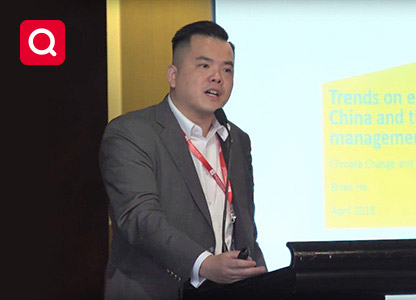
Sustainability Conference - China’s changing environmental regulations continue presenting challenges to business. Brian Ho of EY, provides valuable insights for businesses on navigating the latest Environmental Protection Tax Law.
The Power of Information Disclosure in Greening China’s Supply Chain
Sustainability Conference - The Institute of Public and Environmental Affairs, China, gives an overview of the groundbreaking work the NGO has carried out since 2006 to increase transparency around environmental issues in China.
Sustainability and Chemical Management – Practical insights from Fristads Kansas
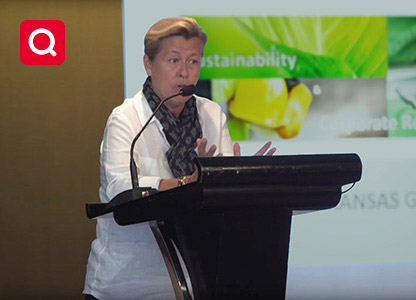
Sustainability Conference - Speaking as the sustainability and CSR officer for Fristads Kansas, a major workwear and servicewear manufacturer, Caroline Bouisset shares practical experience of implementing a sustainability and chemical management program.
Key Compliance Considerations for Brands Sourcing from Small Factories in China
Sustainability Conference - Based on 15 years of experience of directly working with over 1,000 Chinese factories, Charles Coletta provides an overview of the key challenges a brand or buyer may face when sourcing from small factories in China and strategies to overcome them.
Q2 2024 BAROMETER: Q1 Procurement Uptick: a Beacon of Hope for Western Retail?
After a year of sluggish demand, the first quarter of 2024 witnessed a rise in sourcing volumes across the board, both in overseas supplier regions as well as nearshoring markets. This swell in procurement can be linked to multiple factors, such as fading recession fears and improved consumer sentiment in the West, inventory replenishment following the holiday season, as well as brands relying on larger shipments to mitigate longer freight transit times on routes affected by the Red Sea crisis.
Q1 2024 BAROMETER: 2023 in Review: Is Nearshoring Becoming China’s Plus One?
Between global economic downturn and geopolitical tensions, 2023 placed significant pressure on brands and retailers to optimize their costs and secure their supply chains. For many, this meant refocusing their attention on China, increasing nearshoring efforts, or pursuing both strategies simultaneously. Meanwhile, ongoing challenges with supply chain visibility indicate that businesses are far from prepared for the impending wave of ESG legislation set to take effect in the coming months. This barometer report, informed by QIMA’s internal data and the findings of our survey of 800+ businesses with international supply chains, offers a retrospective of 2023 in sourcing and expectations for the coming year.
Q4 2023 BAROMETER: Is China Sourcing Back in the Spotlight as Consumer Demand Slows Down in the West?
With consumer demand slowing down, global brands and retailers are turning back to China sourcing again. Meanwhile, China’s competitors struggle with keeping up with the recent influx of new businesses. This barometer report, informed by QIMA’s data on product inspections and factory audits, offers an insight into the shifting state of the global sourcing landscape as 2023 draws to a close.
Q3 2023 BAROMETER: ESG Legislation Progress Means No More Business as Usual in Supply Chain Sustainability
As we approach mid-2023, long-awaited progress in European supply chain law is finally mandating ESG compliance and placing a greater emphasis on supplier analysis. Despite Western buyers seeking greater supply chain variety both domestically and internationally, QIMA's sourcing insights show that China remains a constant player in global procurement.
Q2 2023 Barometer: Global Buyers Eye China’s Tentative Comeback, While Need for Supply Chain Digitization Grows
2023 promises stronger competition among Asia’s manufacturing powerhouses. More businesses are turning to digital solutions to improve supply chain. This barometer report is informed by QIMA’s data on inspections and audits, as well as the insights from our latest survey of over 250 consumer goods businesses.
QIMA Q1 2023 Barometer: 2022 in Review: No Slowing Down the Global Sourcing Rollercoaster
Russia-Ukraine geopolitical crisis thrown into sourcing landscape; logistics hurdles remain in COVID-19 aftershock—supply chain disruptions are here to stay.
Q4 2022 Barometer: Another Turbulent Holiday Season in Store for Global Sourcing
Three quarters into 2022 and QIMA data shows that the global sourcing landscape remains in flux, with a deepening decoupling of global supply chains from China and intensified competition between other sourcing markets in Asia, while the specter of recession in the West chips away at consumer confidence and buying volumes.
Q3 2022 Barometer: Supply Chains Might Get Worse Before they Get Better
As supply chain disruptions rage on, QIMA’s latest barometer report, informed by internal data on supply chain inspections and audits and the findings of a survey of 400+ global sourcing businesses highlights the continued evolution of supply chain strategies worldwide.
Q2 2022 Barometer: Global Sourcing in 2022: Uncertainty the New Norm
Still struggling with the uneven recovery and logistics chaos that dominated 2021, global supply chains received new blows in late February and March 2022, with the resurgence of COVID-19 in critical sourcing regions and the added uncertainty regarding the potential impact of the Russia-Ukraine war on global trade.
Q4 2021 Barometer: Can South Asia Sourcing Save the Holiday Season from Supply Chain Chaos?
Between the ongoing global logistics logjam and a new wave of COVID-19 related lockdowns in Asia, global sourcing displays ominous signs for the upcoming holiday season.
Q1 2021 Barometer: 2020 in Review: Global Trade COVID Disruption Reveals Changes in Consumption Habits and Rampant Ethical Risks, as China Sourcing Beats the Odds
Almost a year into the COVID-19 crisis, uncertainty and disruption continue dominating global trade.
Q4 2020 Barometer: Global Trade Sees Asia's Manufacturing Powerhouses Begin to Rally Following Rebounding Demand in the West
Despite the fairly apocalyptic outlook that prevailed earlier in the year, sourcing insights for Q3 suggest that the crash of global trade in 2020 may ultimately be less dramatic than predicted.
COVID-19 Impact: China Sourcing Suggests W-Shaped Recovery While Manufacturing Struggles in Rest of Asia
Throughout Q2 2020, global supply chains have remained in the grip of the COVID-19 pandemic. Lockdowns are triggering dramatic yet erratic drops in demand and supply.
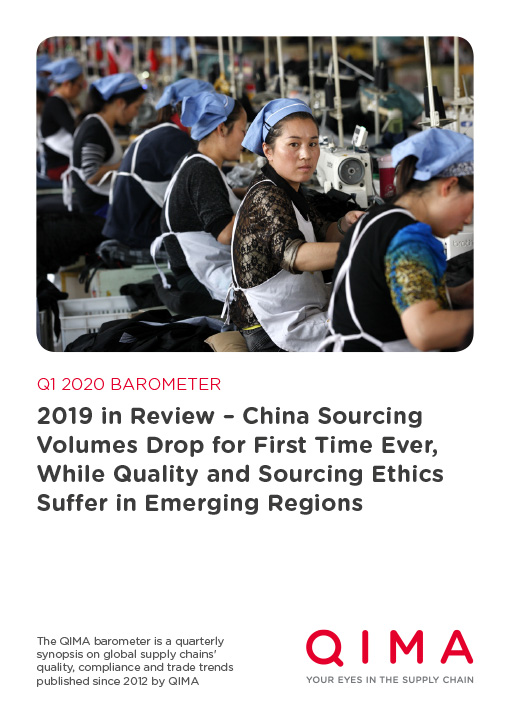
Q1 2020 Barometer: 2019 in Review – China Sourcing Volumes Drop for First Time Ever, While Quality and Sourcing Ethics Suffer in Emerging Regions
While the promise of a US-China trade deal may have brought some welcome optimism to the holiday season, the changes wrought on global trade by the trade wars of 2019 will linger.
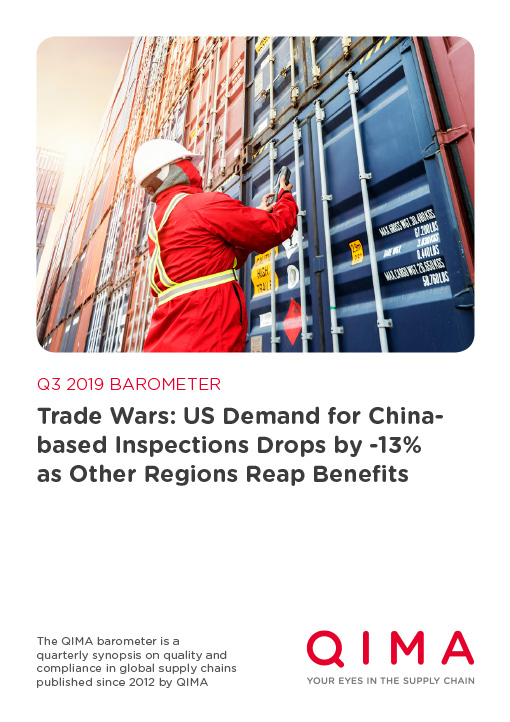
QIMA Q3 2019 Barometer: Trade War: US Demand for China-based Inspections Drops by -13% as Other Regions Reap Benefits
Despite new US-China tariff hikes being on hold, the continuing shifting of US sourcing away from China underscores the lingering uncertainty faced by American businesses...
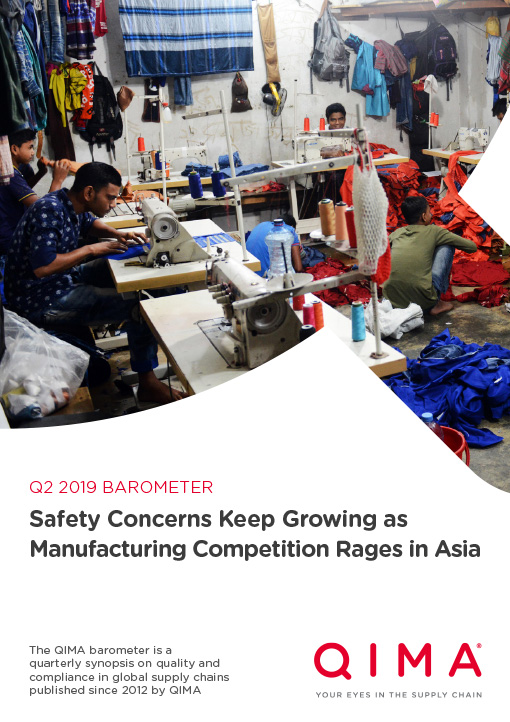
Q2 2019 Barometer: Safety Concerns Keep Growing as Manufacturing Competition Rages in Asia
Global sourcing in the first quarter of 2019 is still largely shaped by the fallout of 2018, in which US-China trade wars shook up the global sourcing landscape and drove many...
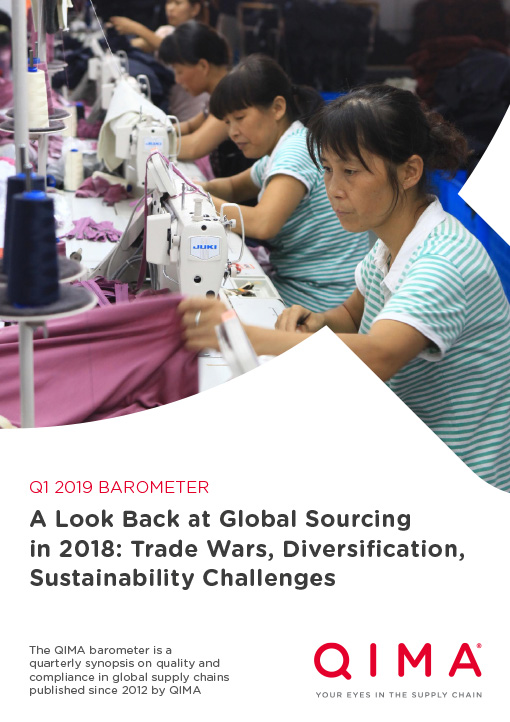
Q1 2019 Barometer: A Look Back at Global Sourcing in 2018: Trade Wars, Diversification, Sustainability Challenges
Between the US-China tariff stand-off and the increasing consumer and governments’ scrutiny on sustainability issues, 2018 proved a challenging year for global sourcing...
Q4 2018 Barometer: Are Supply Chain Ethics Becoming a Casualty of the Trade Wars?
As Asia’s manufacturing hubs are ramping up production for the upcoming holiday season, this quarter’s barometer paints a picture of increasingly diversified global sourcing and...
Q3 2018 Barometer: Ethical, Environmental Concerns Run High in Global Supply Chains
While concerns about international trade tensions abound halfway into 2018, QIMA's latest data on quality inspection and supplier audit demand offers some perspective on the shape...
Q2 2018 Barometer: China Unfazed by Global Trade Stand-Off, Supply Chains Face New Ethical Concerns
As manufacturing picks up in Asia’s sourcing hubs following the Chinese New Year break, QIMA's Q1 statistics for inspection and audit demand reflect the emerging sourcing trends...
QIMA Q1 Barometer: What Does 2018 Hold for Global Supply Chains
QIMA's 2018 Q1 Barometer offers a collection of unique insights on the state of sourcing, quality and compliance in 2017, as well as the trends that will shape the sourcing...
QIMA Q4 Barometer: Manufacturing Peak Season Brings New Quality and Ethical Challenges
As the holidays approach and manufacturing peak season has started in sourcing powerhouses throughout Asia, QIMA data on inspection and audit demand reflects the overall trends in ...
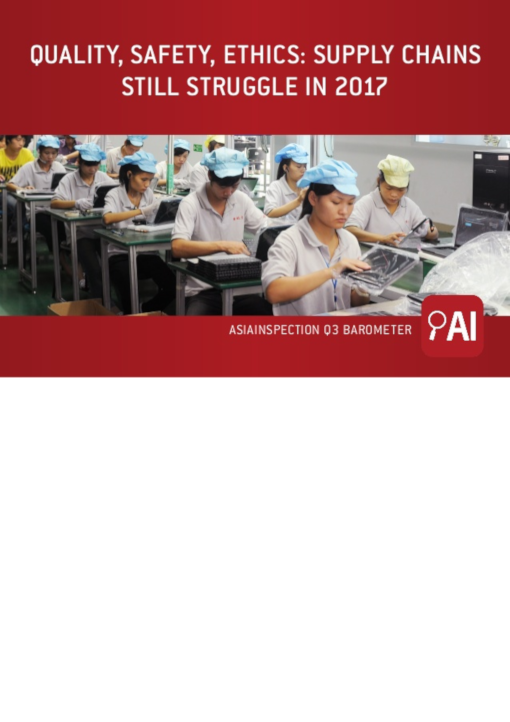
QIMA Q3 Barometer: Quality, Safety, Ethics: Supply Chains Still Struggle in 2017
Halfway through 2017, QIMA's onsite inspection and supplier audit statistics paint a picture of the ongoing struggle between old-school sourcing giants and their up-and-coming...
QIMA's Q1 figures for inspection and audit demand are a reflection of the sourcing trends that will continue shaping global trade throughout the rest of 2017. The first quarter of...
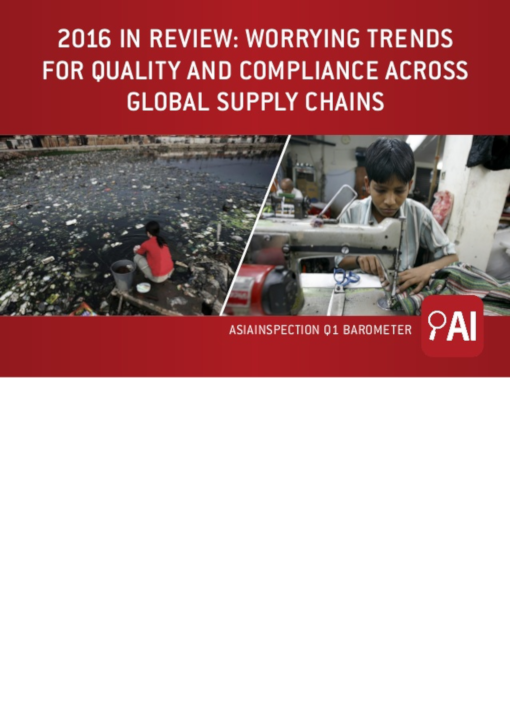
QIMA Q1 Barometer: 2016 in Review: Worrying Trends for Quality and Compliance across Global Supply Chains
QIMA 2016 audits and inspection demand gives an indication of the attractiveness of each sourcing regions for global brands and buyers. Read more in QIMA's Q1 barometer...
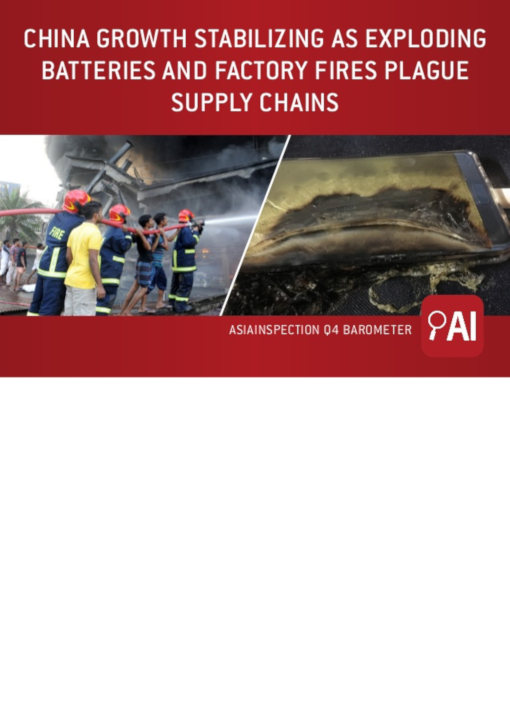
QIMA Q4 Barometer: China Growth Stabilizing as Exploding Batteries and Factory Fires Plague Supply Chains
QIMA data for Q3 2016 in China shows increased audit and inspection demand, at +12.6% compared to Q3 2015, consistent with the economic rebound China has displayed recently...
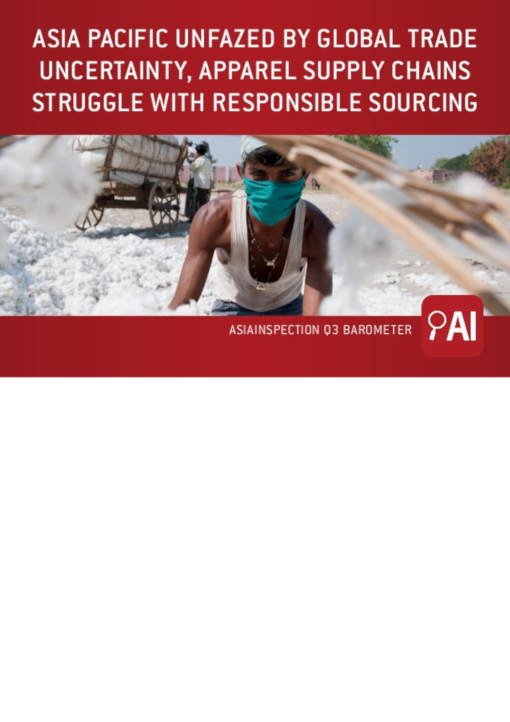
QIMA Q3 Barometer: Asia Pacific Unfazed by Global Trade Uncertainty, Apparel Supply Chains Struggle with Responsible Sourcing
Q2 2016 brings a lot of uncertainty to global trade, but China and Asia Pacific appear unfazed. Meanwhile, global apparel supply chains still struggle with safety and unethical lab...
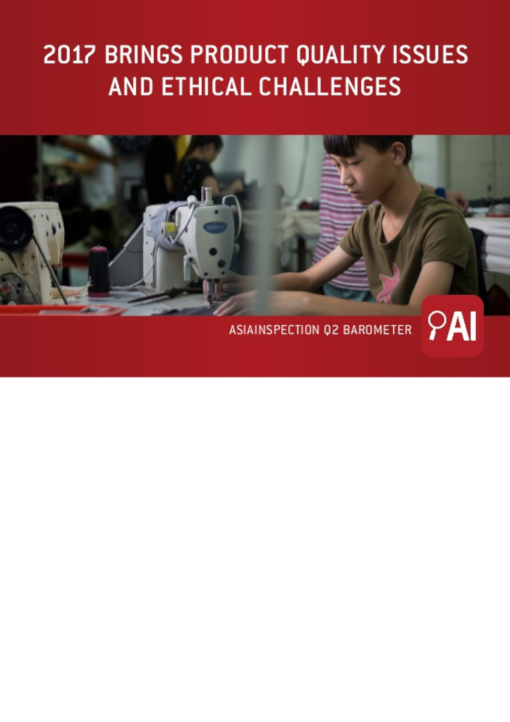
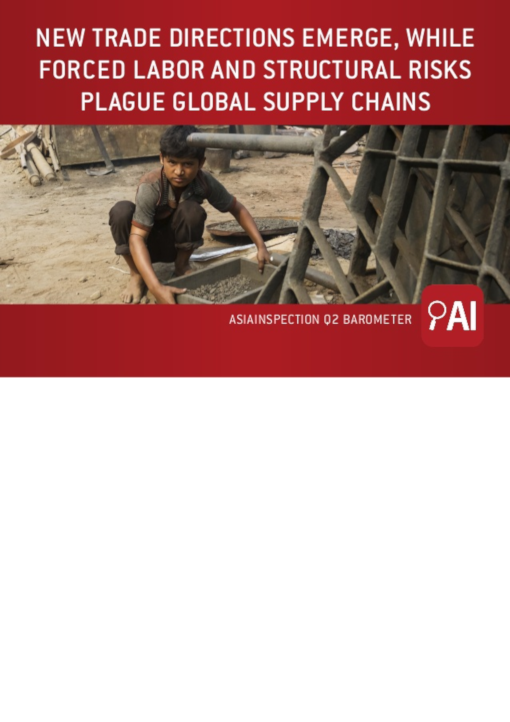
QIMA Q2 Barometer: New Trade Directions Emerge, While Forced Labor and Structural Risks Plague Global Supply Chains
The year 2016 begins with shifts in global trade, ongoing quality issues, and a host of ethical challenges: from structural risks accompanying expansion in Egypt, Bangladesh, and...
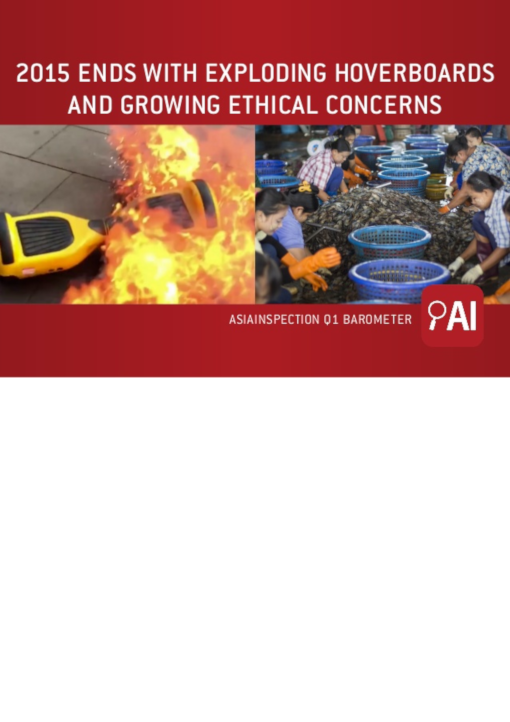
QIMA Q1 Barometer: 2015 Ends with Exploding Hoverboards and Growing Ethical Concerns
China still in the spotlight for product safety, ethical issues abound in new sourcing regions and environmental impact is moving up the supply chain priority list.
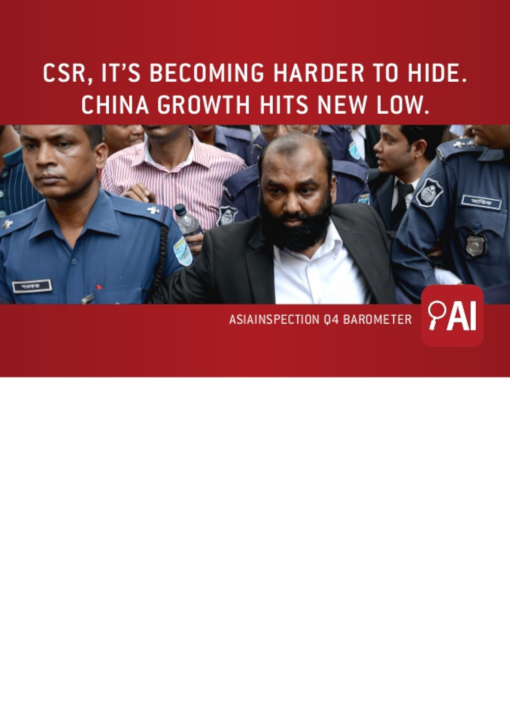
QIMA Q4 Barometer: CSR, it's Becoming Harder to Hide. China Growth Hits New Low
China's new Food Safety Law introduces harsher standards and punishments and Bangladeshi prosecutors bring murder charges against the owners of Rana Plaza and the Tazreen factory.
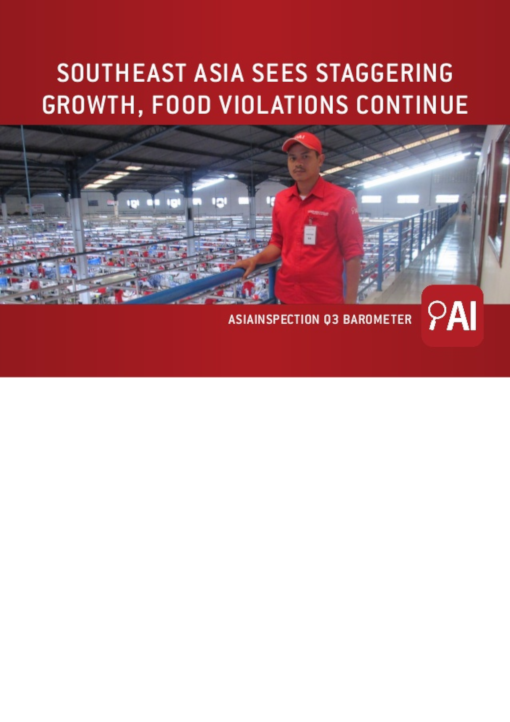
QIMA Q3 Barometer: Southeast Asia Sees Staggering Growth, Food Violations Continue
While the economy of China may be growing at its slowest pace in six years, global brands are readily expanding their supply chains to other low-cost destinations in Asia...
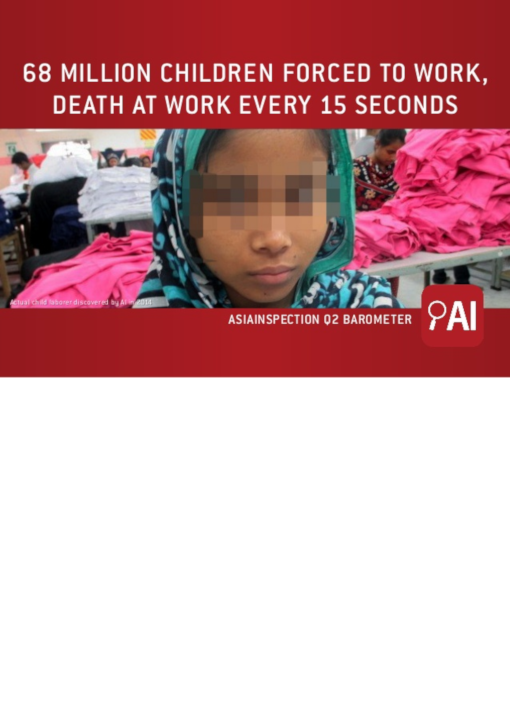
QIMA Q2 Barometer: 68 Million Children Forced to Work, Death at Work Every 15 Seconds
The ILO published that every 15 seconds someone dies as a result of an occupational accident or disease. Congruent with what seems to be a sharp rise in global awareness on ethical...
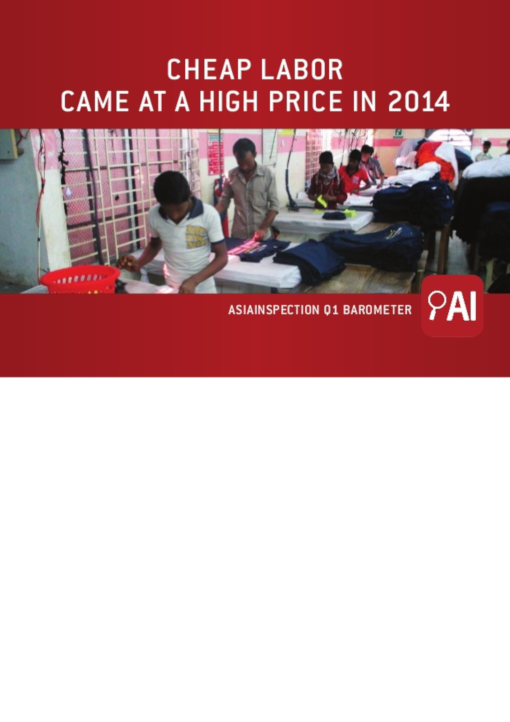
QIMA Q1 Barometer: Cheap Labor Came at a High Price in 2014
Increased global supply chain transparency in 2014 revealed shocking statistics on the number of forced and child laborers worldwide, while workers across Asia faced consistently...
 REACH compliance testing tests products for the presence of substances found on Annex XVII and Candidate List of SVHCs. If a chemical is present in any concentration and is listed on Annex XVII, it will fail testing and would be banned from the EU market. SVHCs require authorization to be used in any product and are generally allowed if the concentration is less than 0.1% of the total product weight. If the concentration is higher, the importer or manufacturer must disclose this to customers with correct labeling and to ECHA, and may be subject to restrictions.